
What a Lawn Soil Test Shows About pH and Lime
A soil test reads the lawn's pH and its nutrient levels, and that reading is what says whether lime goes down before the seed, the sod or the fertilizer does.
Free, no-obligation estimates. We answer the phone or call back the same working day.
What a lawn soil test measures
A lawn soil test measures the soil's pH and its nutrient levels, and from those it shows how much lime and how much fertilizer the lawn actually needs.
It takes the guessing out of feeding a lawn. Without one, lime and fertilizer go down by habit or by what the bag says; with one, they go down because the soil asked for them.
A soil testing laboratory such as the UMass Soil and Plant Nutrient Testing Laboratory runs the sample and sends back the readings with a lime and fertilizer recommendation for the lawn.
What the results tell you
- Soil pH
- How acidic the soil is, and whether lime is needed to adjust it.
- Nutrient levels
- What the soil already holds, and what the fertilizer has to supply.
- The recommendation
- How much lime and which fertilizer the lawn needs, read off those numbers.
Taking a soil sample from the lawn
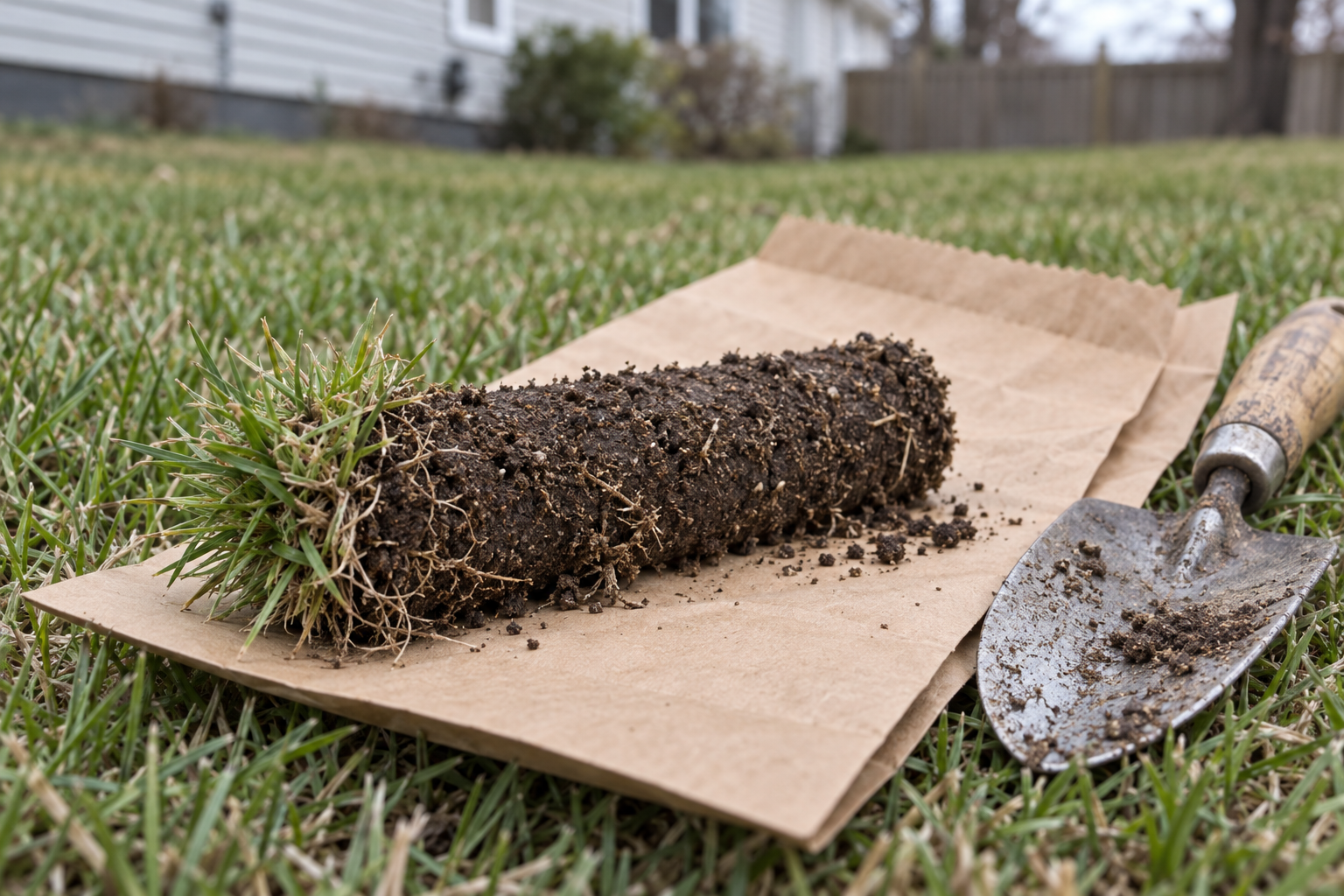
A good sample should come from several small cores taken across the lawn at the same depth, mixed together and sent to a soil testing laboratory.
It comes together in these steps:
Spread out
Walk the whole lawn and take cores from spots all across it, not from one corner or one bare patch.
Same depth
Push the probe or trowel to the same depth every time, so each core reads the same slice of soil.
Mix them
Drop the cores in a clean bucket, break them up and mix them into one sample that stands for the lawn.
Send it in
Bag a portion of the mix and label it, so the readings that come back belong to this lawn.
The UMass Extension guide, Soil Sampling for Meaningful Results, walks through the depth and the number of cores for a home lawn.
Soil pH for grass and how lime raises it
Lawn grasses grow best in "slightly acidic" soil, and when the pH has dropped too low, lime is what raises it back.
Where a soil test reading can land:
- Too acidicGrass struggles; lime raises the reading
- Where grass grows bestSlightly acidicThe range the lawn wants
- NeutralNeither acidic nor alkaline
- AlkalineLime would push it the wrong way
Lime moves a low reading up
When the soil has turned too acidic, the grass has a harder time making use of what it is fed. Liming, which the trade calls "limestone application", adjusts the pH so the grass can use what is in the ground, and it matters most for new seedlings.
The soil test is what decides whether lime is needed at all, which is why it comes before any lime goes down. The UMass Extension fact sheet, Soil pH and Liming, explains how pH affects turf and how lime raises it.
Putting in new seed or sod this season?
Call with the address and what you have in mind. Our sod prep starts with a soil test, so the lime goes down before the grass does, and we quote the whole job before we start.
The estimate is free and carries no obligation.
Soil tests before seeding and new sod
A soil test comes before seeding or laying new sod, so the lime and any amendments go down before the grass does.
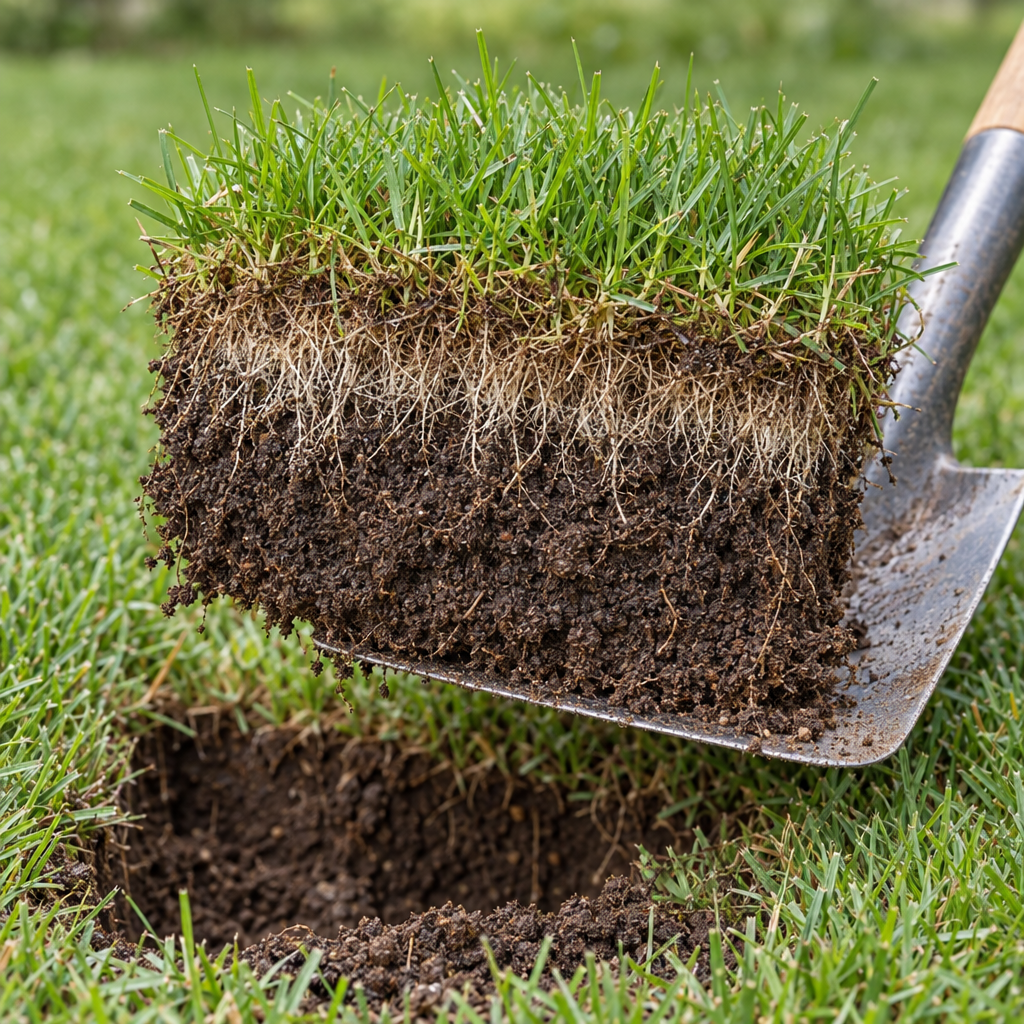
Once the turf is in, whatever the soil lacks is under it. Before it goes in, the ground is open, and that is the moment to correct the pH and work in what the test asks for.
On a new lawn the work runs in this order:
- Test the soilSee what the soil holds and what amendments it needs.
- Lime and amendSet the pH right for new seedlings or fresh sod.
- Seed or sodThe grass goes down on ground that is ready for it.
From test results to a care plan
The results set how much lime the lawn's program uses and which fertilizer goes down with it.
A lawn program built on a soil test feeds what the soil is short of, rather than the same mix every lawn gets. When the readings change, the program changes with them.
Fertilizing and liming from test results
A low pH calls for lime before feeding, and the nutrient levels set the fertilizer the program uses.
On a lawn we are seeding, the lime goes down first so the pH suits the seedlings, and the fertilizer follows the seed to feed the existing grass and the new.
lawn fertilizing seasonal programWhat neighbors say
These are our Google reviews from owners around Providence, in their own words.
William has been taking care of our yard since the spring, and we couldn’t be happier. What began as a simple spring clean-up has turned into ongoing lawn and yard maintenance. He’s incredibly dependable, does meticulous work, and is an absolute pleasure to work with — not to mention very reasonably priced. I highly recommend him to anyone looking for a reliable and detail-oriented landscaper in the area.
William was very professional from the start with clear communication and pricing. He removed 4 large, old shrubs and trimmed others, cleaned up the beds and edged the area. He also took away all the yard waste and left the area clean. Pleasant to work with; highly recommended
I've been using Mela Landscapes for a few months and they are by far the best landscapers I've used in the Providence area. They are dependable, do an amazing job, and are a pleasure to work with. I highly recommend them.
Get the soil right before the grass goes in
Call and tell us the address and what the lawn needs. We come out, look at the ground and quote the whole job before any work starts, with no surprise charges after.
Calls outside working hours go to voicemail, and we return them the next working morning.
- Free, no-obligation estimates
- We show up when we say we will
- We clean up when the work is done