
Lawn Grubs: The Signs, the Damage and When to Treat
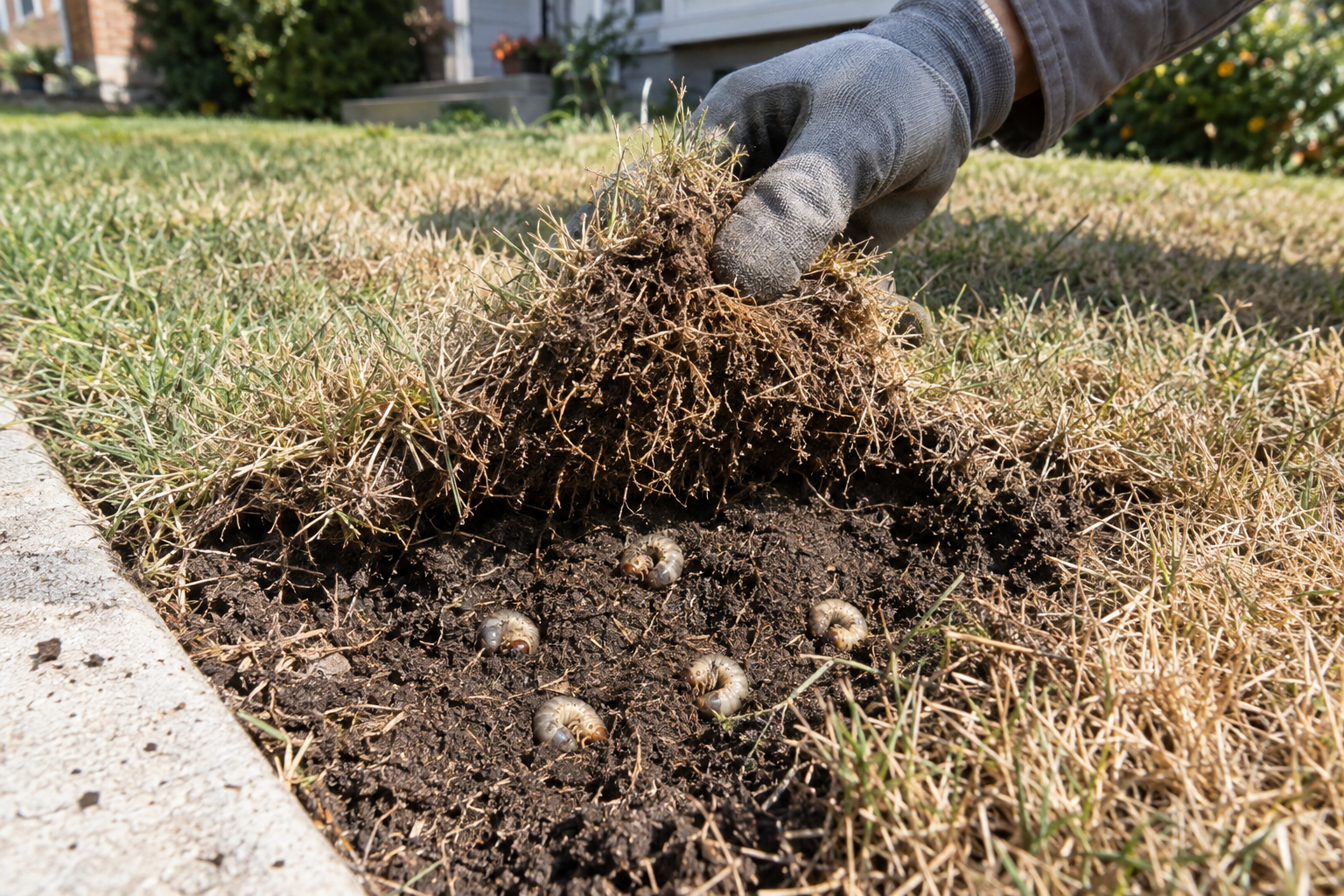
Brown patches that lift like loose carpet usually mean grubs are feeding on the roots, and the control for them goes down in early summer.
Free, no-obligation estimates. We answer the phone or call back the same working day.
Lawn grubs, defined
Lawn grubs are the C-shaped larvae of beetles, and they live just below the surface of the lawn, feeding on the grass roots.
You rarely see them, because they stay in the soil under the turf. What you see is what they leave behind: grass that browns and thins in patches, because the roots that held it down have been eaten away.
For telling a grub apart from anything else you turn up with a trowel, the identification sheet from UMass Extension: White Grub Identification is the one we point owners to.
Where the damage happens
Grass blades
What you see go brown, long after the trouble started below.
"Thatch" at the soil line
The layer of dead grass where the turf meets the ground.
The root zone
Where the grubs curl up and feed, out of sight, cutting the turf loose from the soil.
Signs of grub damage
Grub damage can show as brown patches where the turf lifts like loose carpet, and often as animals digging up the lawn to get at the grubs.
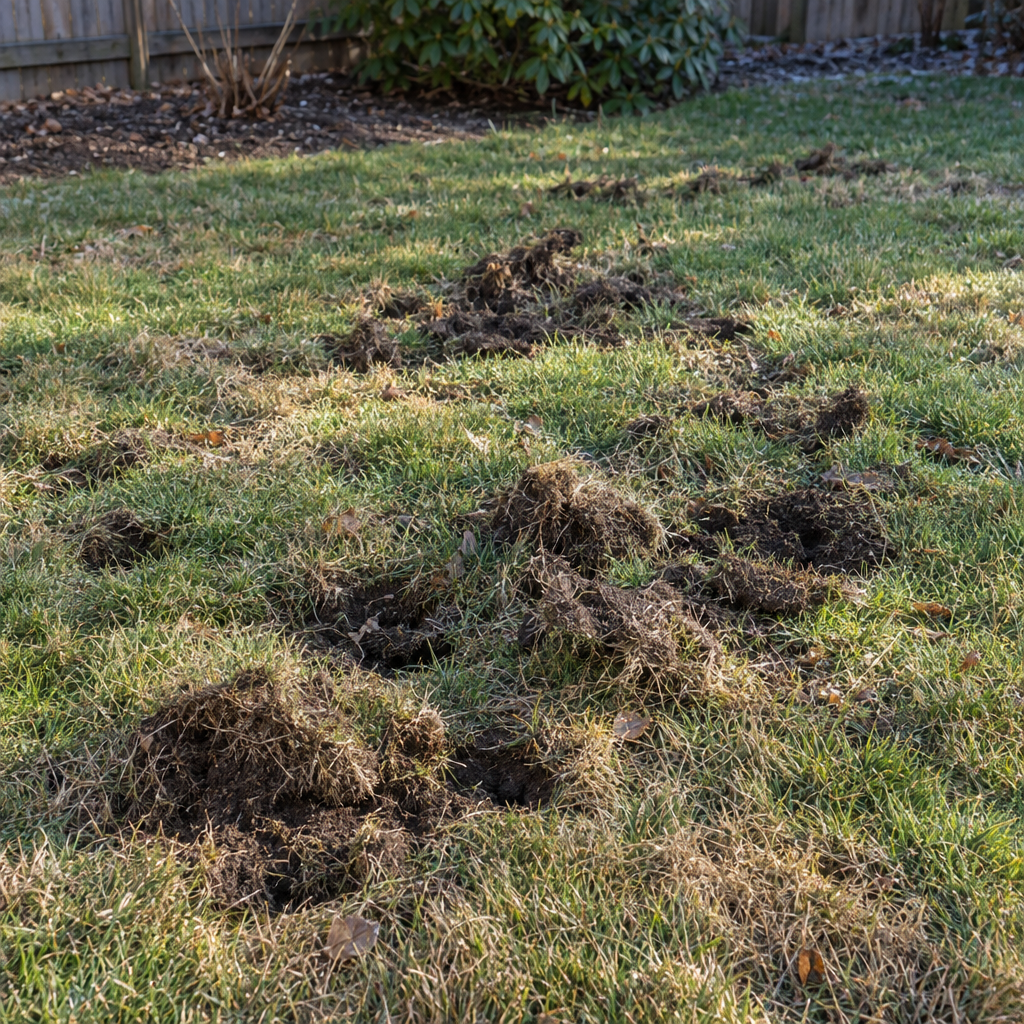
Look for these signs of grub damage in the lawn:
- Brown patches that do not green upIrregular dead areas that stay brown after rain, because the roots underneath are gone.
- Loose turf that lifts like carpetTake hold of the brown grass and pull. With the roots eaten through, it peels back from the soil, and the grubs are often right there underneath.
- Animals digging in the lawnSkunks, raccoons and birds tear up turf to feed on grubs, so fresh digging is often the first sign anyone notices.
Brown grass that also lifts in your hand is the pairing to take seriously. That is the time to call and have the lawn looked at.
When grub control goes down in a fertilizing program
Grub control goes down in early summer, to stop the damage below the surface rather than chase it after the lawn has browned.
Early summer
The window to have on the calendar. Book it in spring and it goes down on time, ahead of the damage.
Late summer
When brown, loose patches tend to show on a lawn that was left untreated.
Early fall
When thinned areas are reseeded, since the cool-season grass here is seeded in early fall.
Our timing follows the research-based guidance in UMass Extension: Current Insecticide Approaches for White Grub Control, which covers when and how grub products are applied.
If you would rather not track the calendar, grub control can be scheduled with the season's lawn feeding, so it goes down on time without anyone remembering it.
lawn fertilizing timed to the grassBrown patches that lift like carpet?
Call with the address and tell us what the lawn is doing. We come out, look at the damage and quote the whole job before any work starts.
The estimate is free and carries no obligation.
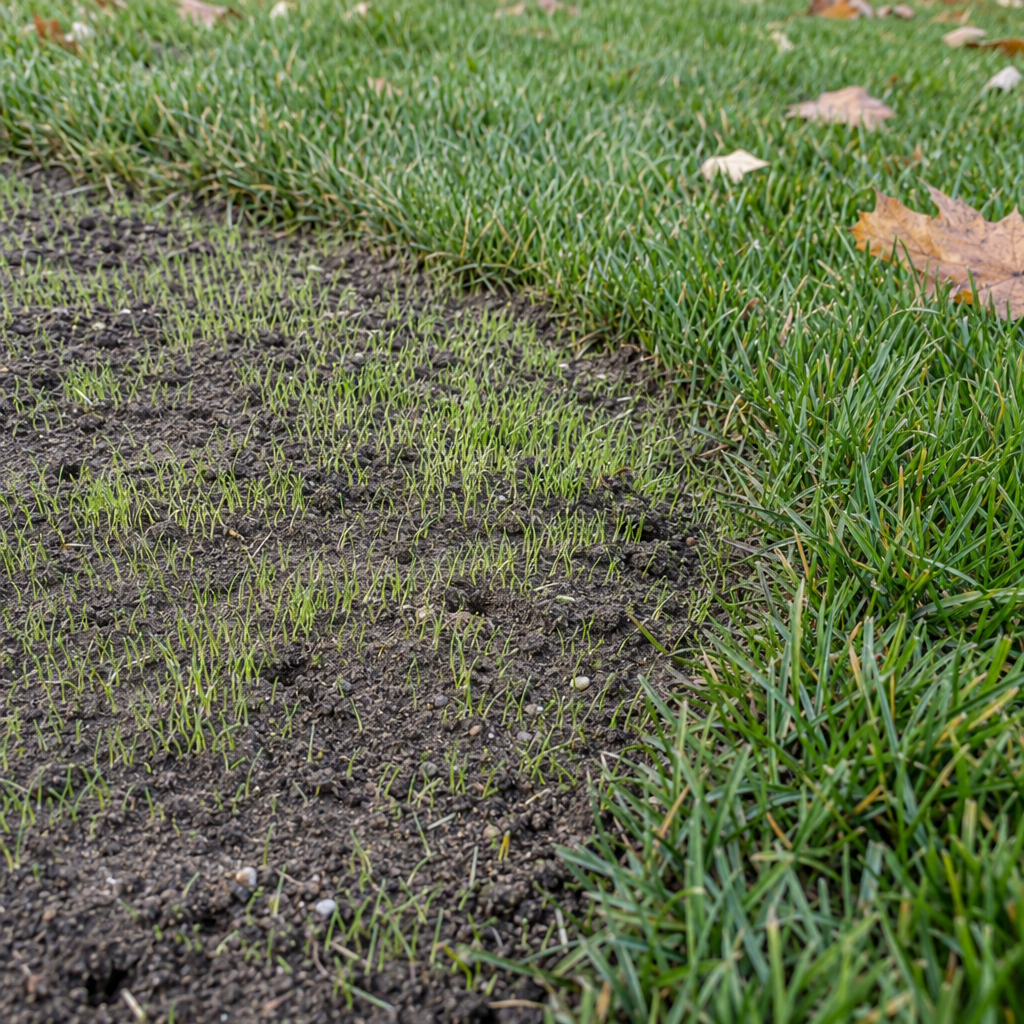
Reseeding a lawn after grubs with aeration and overseeding
A lawn thinned by grubs can recover once the grubs are under control and the bare areas are reseeded.
Left untreated, grubs keep thinning the turf and slow its recovery, so control comes before repair. Seed put down over active grubs is up against the same feeding that killed the grass in the first place.
Then the bare spots are filled. "Overseeding" puts new seed into loosened soil so it can germinate, which is how a thin lawn fills back in, and opening the ground with "core aeration" first gives that seed somewhere to take hold.
Recovery runs in this order:
- Control the grubsStop the feeding below the surface.
- Loosen the soilAerate so the seed reaches the ground.
- Reseed the bare areasOverseed and let the new grass fill in.
Other root problems
Grubs are not the only thing that weakens roots: compacted soil and smothering leaves do it too, and each has its own fix.
Both can leave a lawn thin and patchy, so it is worth knowing which one you have before anything is treated for grubs.
Compaction and thin turf
Compacted soil can thin the turf in a way that looks like grub damage, and "core aeration" is what relieves it.
Aeration pulls plugs of soil, which exposes the roots and relieves the compaction. The difference shows when you pull on the grass: over hard, packed ground the turf stays anchored, while over grubs it lifts away.
Smothering leaves
Leaves left lying on the lawn block the light and smother the turf beneath them, and the roots weaken with it.
The fix is getting them off in the fall, raked, blown and hauled away before the snow, so the grass goes into winter breathing.
Owners around Providence on our work
These are our Google reviews, in the owners' own words.
William has been taking care of our yard since the spring, and we couldn’t be happier. What began as a simple spring clean-up has turned into ongoing lawn and yard maintenance. He’s incredibly dependable, does meticulous work, and is an absolute pleasure to work with — not to mention very reasonably priced. I highly recommend him to anyone looking for a reliable and detail-oriented landscaper in the area.
William was very professional from the start with clear communication and pricing. He removed 4 large, old shrubs and trimmed others, cleaned up the beds and edged the area. He also took away all the yard waste and left the area clean. Pleasant to work with; highly recommended
I've been using Mela Landscapes for a few months and they are by far the best landscapers I've used in the Providence area. They are dependable, do an amazing job, and are a pleasure to work with. I highly recommend them.
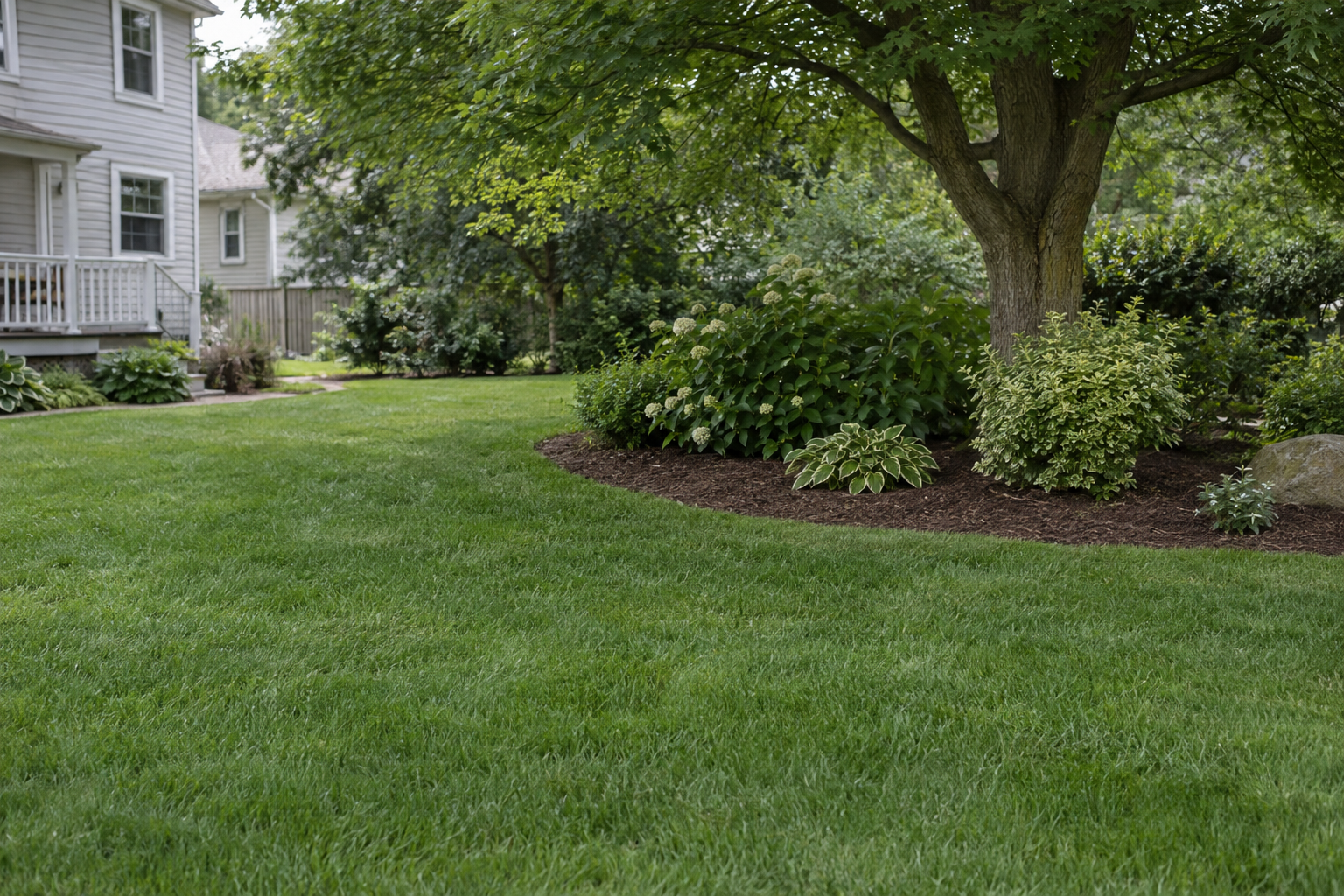
Let us look at those brown patches
Call and tell us the address and what you are seeing in the lawn. We come out, look at the turf and quote the whole job before any work starts.
Calls outside working hours go to voicemail, and we return them the next working morning.
- Free, no-obligation estimates
- We show up when we say we will
- The whole job quoted before we start, no surprise charges after