
Cool Season Grass Types and How Each One Grows
Bluegrass, fescue and ryegrass grow hardest in spring and fall. Here is how each type grows, and how the grass on your lawn sets when we feed and seed it.
Not sure what grass you have? We look at the lawn and tell you, and the estimate is free.
Cool season grass, defined
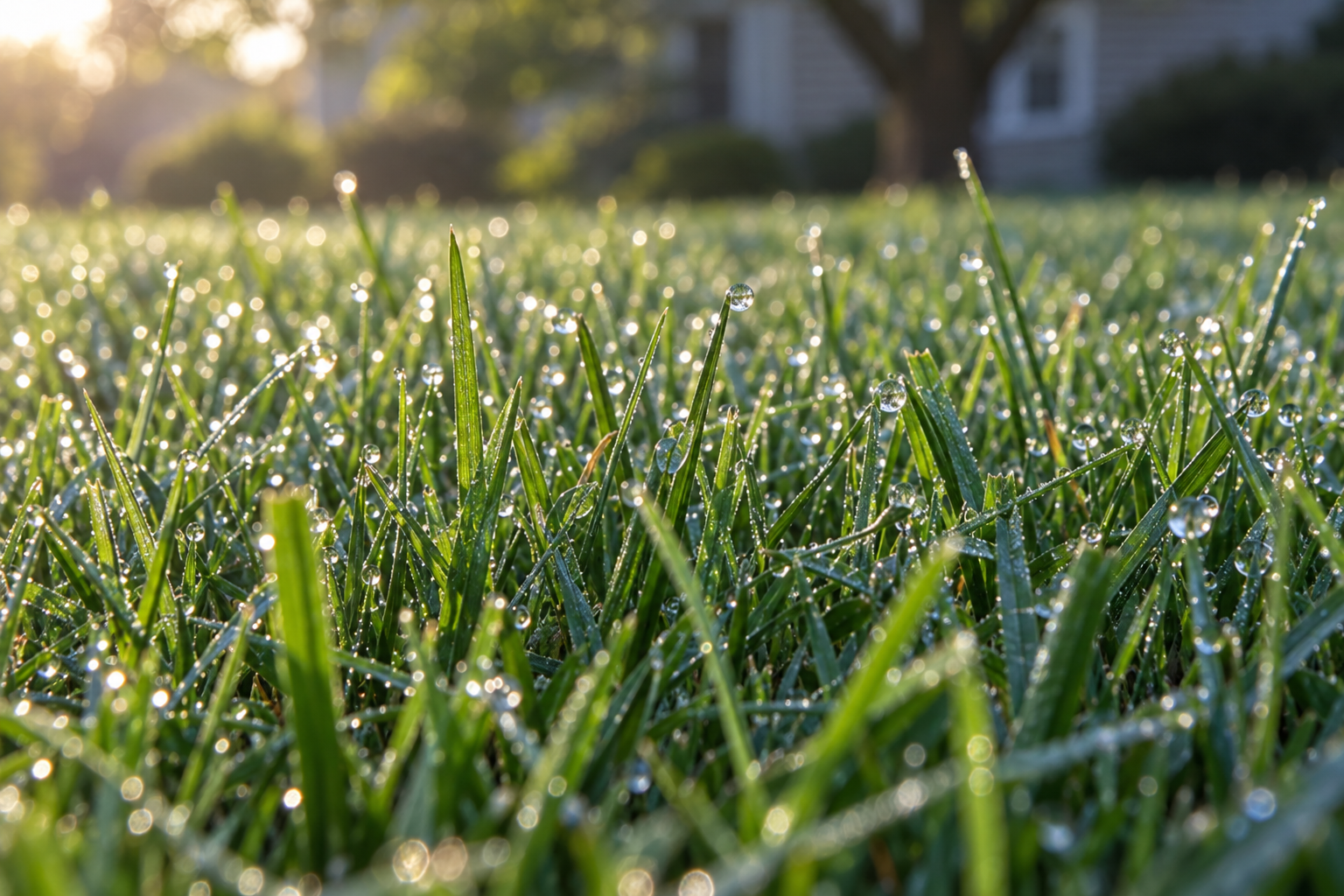
Cool season grass is turf that grows most in the cool weather of spring and fall and slows down in the heat of summer.
If the lawn is fescue or bluegrass, it is a "cool-season grass", and its year follows that pattern: a hard push of growth in spring, a slow, sometimes tired-looking stretch through the hot months, and a second push once the nights cool off.
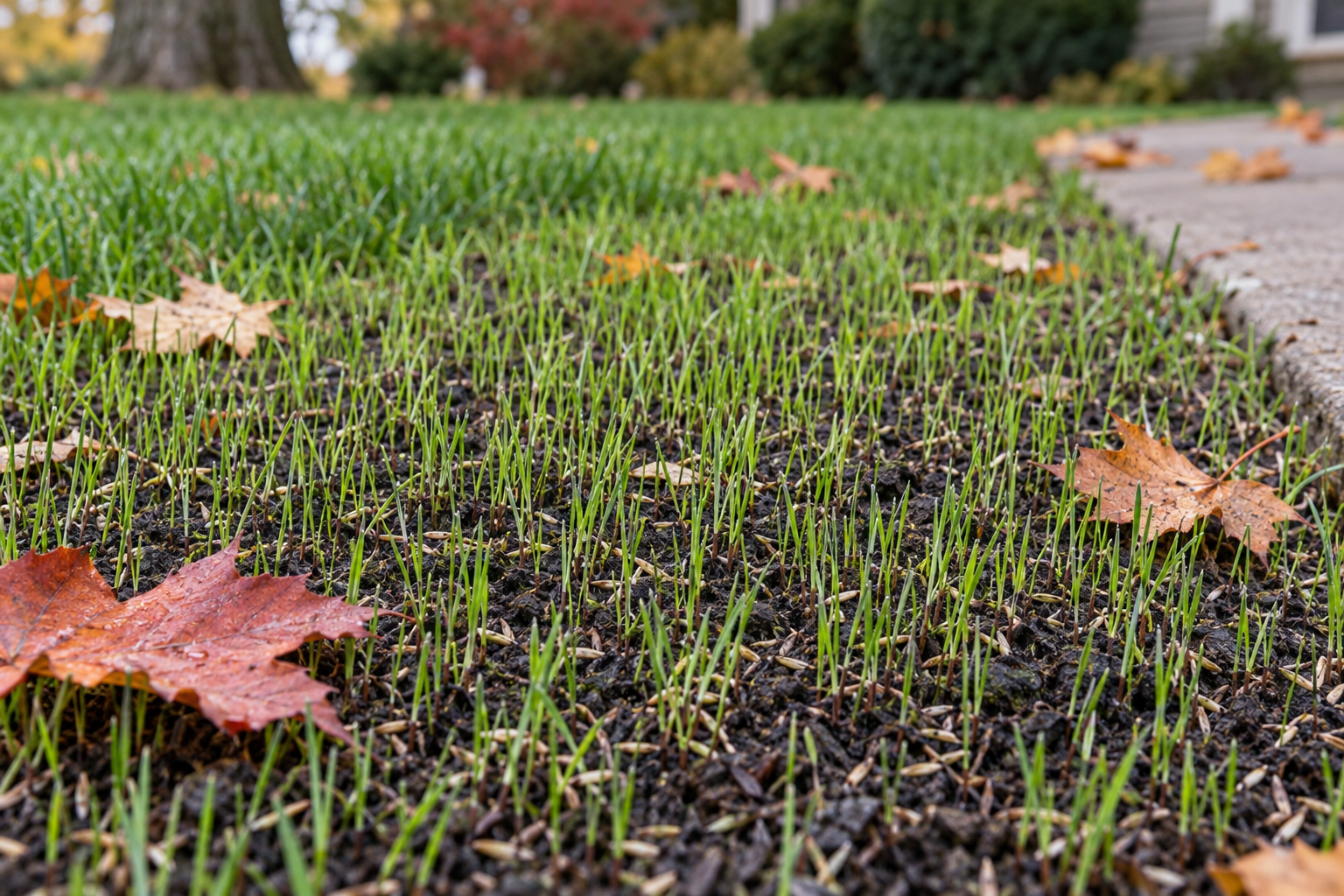
That second push is why early fall is the season that matters most. The soil is still warm, weed competition is low, and the grass is growing again, so early fall is the best time both to seed a cool season lawn and to feed it.
Growth by season
The deeper bar marks our window to seed and feed
Cool season grass types
The common cool season grass types are Kentucky bluegrass, tall fescue, fine fescue and perennial ryegrass, and many lawns are a mix of them. The species and how to choose among them are set out in the UMass Extension guide to the selection of grasses.
Here is how each of the common types grows:
-
Kentucky bluegrass
Spreads by underground runners
Its "rhizomes" creep sideways under the soil, so bluegrass knits into a dense turf and fills its own thin spots. It likes sun and steady feeding, and it is slow to come up from seed.
-
Tall fescue
Grows in clumps from deep roots
Tall fescue does not spread much on its own; each plant thickens where it stands. The deep roots make it a tough lawn that takes wear and rides out a dry spell, and thin areas are filled by "overseeding".
-
Fine fescue
Fine blades that handle shade
The narrowest blades in the group. Fine fescue holds up in shade and in thin, poor soil and asks for little feeding or water, but it does not stand up to heavy foot traffic.
-
Perennial ryegrass
Bunch grass that sprouts fast
Ryegrass comes up quickly from seed, which is why it goes into seed mixes for fast cover. It grows in bunches rather than spreading, so it is usually sown alongside bluegrass.
Choosing grass by sun, shade and wear
Sun exposure, how the lawn is used and how much upkeep you want decide the grass type, and that is the biggest choice in a new lawn, from seed or from sod.
We walk the yard with these three questions before anything goes down:
- How much sun the lawn gets
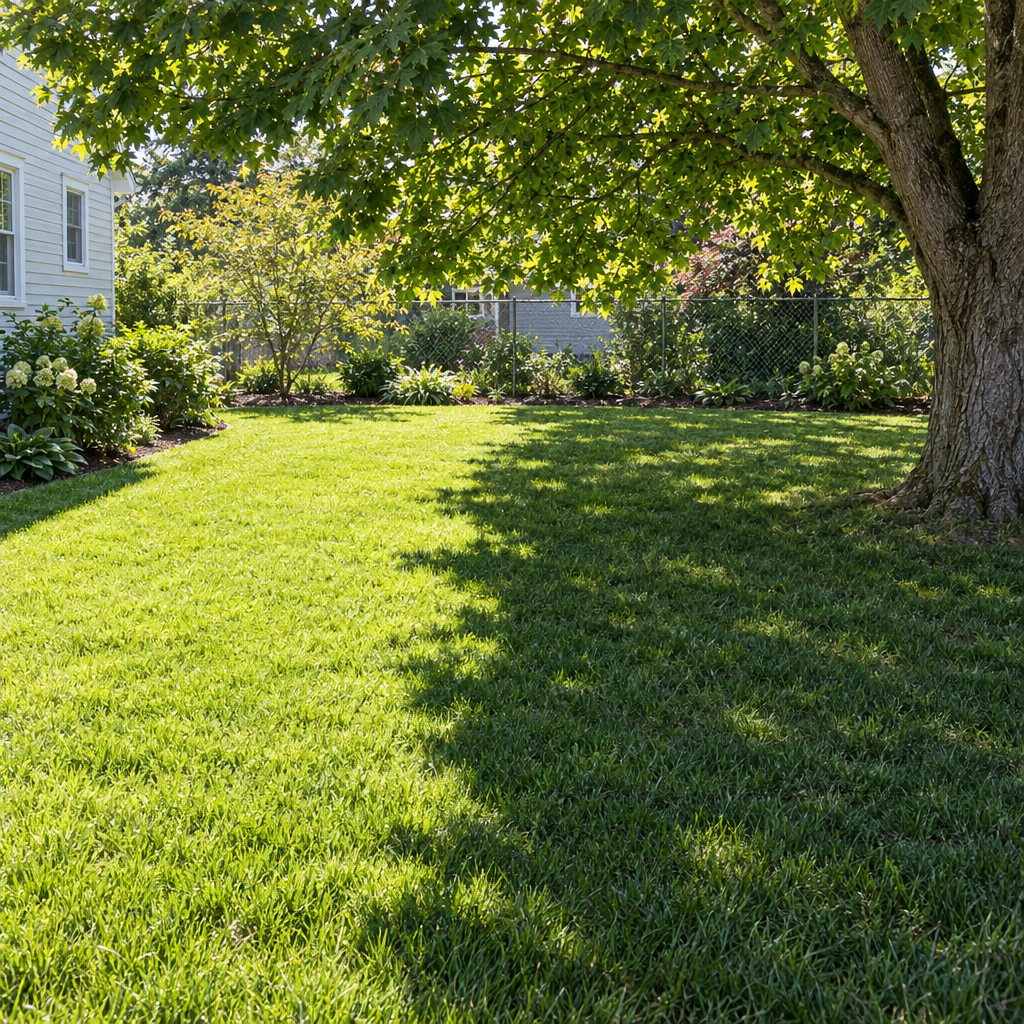
- A lawn in full sun and a lawn under a maple want different grass. Bluegrass wants the sun; fine fescue is the one that holds up in the shade.
- How the lawn is used
- A yard that kids and a dog run on all summer needs a turf that takes wear, where tall fescue and ryegrass hold up better than fine fescue.
- How much upkeep you want
- Bluegrass looks its best with regular feeding and water. Fine fescue gets by on less, and tall fescue sits in between.
How grass type sets mowing, fertilizing and seeding
The grass type sets the whole care calendar, so it is the first thing we identify on a lawn before we plan a single visit.
For a cool season lawn like fescue, the main feeding goes down in fall, heavy nitrogen is held back through summer, and new seed goes in early fall. The timing follows the research-based guidance on feeding northeastern lawns from the Cornell Turfgrass Program.
Summer
Hold back the nitrogen
The grass is slowed by the heat, so heavy feeding waits until it is growing again.
Early fall
Seed and overseed
Warm soil and low weed competition make this the best window for new seed to take.
Fall
The main feeding
Fescue takes its main feeding in fall, while it is putting on its second push of growth.
Not sure which grass your lawn is?
That is the first thing we find out. Call with the address, we come and look at the turf, and you get a care plan timed to your grass, quoted in full before any work starts.
We answer the phone or call back the same working day.
Cool season versus warm season grass
Warm season grasses run the reverse calendar: they grow most in summer and are fed and seeded from late spring, while cool season grass grows in spring and fall and is fed and seeded in early fall.
Cool season grass
Kentucky bluegrass, tall fescue, fine fescue, perennial ryegrass
- Grows most
- Spring and fall
- Fed
- Early fall, with heavy nitrogen held back in summer
- Seeded
- Early fall, when the soil is warm and weeds compete least
- Hard season
- Slows down in summer heat
Warm season grass
Bermuda, zoysia
- Grows most
- Summer, and may need mowing every 1 to 3 weeks depending on how fast it grows
- Fed
- Spring, about two weeks after it greens up
- Seeded
- Late spring to early summer
- Hard season
- Goes "dormant" and tan in winter, greening up late in spring
Sod grass and its roots
Sod is cut from grass that has already grown in, so every roll is a particular grass type, and that type sets how fast it roots. Bermuda sod roots fastest, then zoysia, then fescue, so a cool season fescue sod takes the longest to knit down. Sun, use and upkeep pick the type, the same as they do for seed.
What neighbors say about the work
Our Google reviews from owners around Providence, in their own words.
William has been taking care of our yard since the spring, and we couldn’t be happier. What began as a simple spring clean-up has turned into ongoing lawn and yard maintenance. He’s incredibly dependable, does meticulous work, and is an absolute pleasure to work with — not to mention very reasonably priced. I highly recommend him to anyone looking for a reliable and detail-oriented landscaper in the area.
William was very professional from the start with clear communication and pricing. He removed 4 large, old shrubs and trimmed others, cleaned up the beds and edged the area. He also took away all the yard waste and left the area clean. Pleasant to work with; highly recommended
I've been using Mela Landscapes for a few months and they are by far the best landscapers I've used in the Providence area. They are dependable, do an amazing job, and are a pleasure to work with. I highly recommend them.
Get a lawn plan timed to your grass
Call and tell us the address. We come out, name the grass on the lawn, and quote the whole season of care, from the early fall seeding to the fall feeding, before any work starts.
Calls outside our working hours go to voicemail and we return them the next working morning.
- Free, no-obligation estimates
- The whole job quoted before we start, no surprise charges after
- We show up when we say we will